


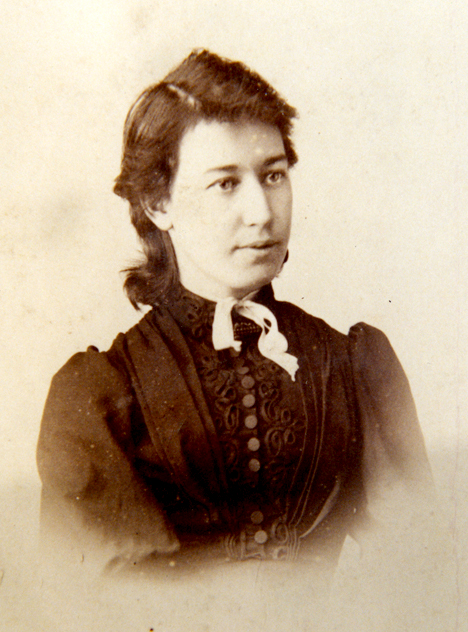
 DX409/11 - Portrait of Annie Gwen Jones
Annie Gwen Jones arrived in 1889 as a governess to Arthur Hughes’s children. She left after the 1892 riot, but her memoir captures the town at its height and the British community from within. “I left Wales burning with a strong desire to see green fields and pastures new and especially to see Russia that land of oppression and misery, that country one hears so much about, but really about which one knows so little.”
She remembered the Hughes townhouse as “a large one‑storeyed house in town, a short distance from the works” with spacious gardens “walled high for protection, and guarded by watchmen”. Life, she wrote, was far from monotonous: letters and news from home arrived frequently, guests of many nationalities called, and even the governor of Ekaterinoslav stayed, bringing tales of political intrigue. The winters were raw: “We had to be very warm clad to withstand the severity of the cold… a fur cap of astrakan‑skin… a shawl of camels hair… Fur‑lined boots and over these fur‑lined goloshes completed our costume.” Sledge rides could be dramatic; “packs of wolfish‑looking dogs” sometimes chased them over the steppe.
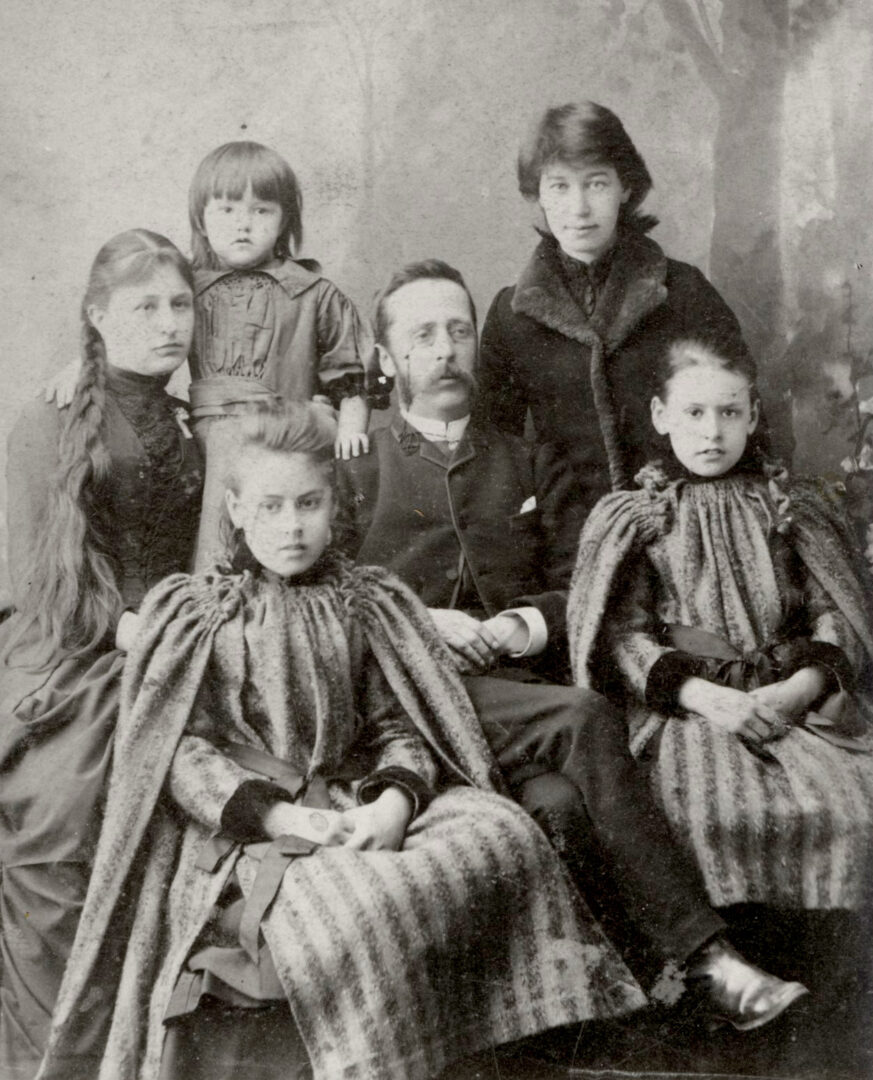 DX409/1 - Arthur Hughes and family with Annie Jones
Evenings brought “mournful melodies” from townspeople singing. Jones’s pages hold the contradictions of privilege and proximity: careful household routines behind high walls; curiosity and hospitality; and outside, the hard new city of furnaces, rails and smoke. In 1892, as unrest and epidemic converged, she departed—one of many women whose observations give Hughesovka its human voice.
![Postcard from G. J. [?Annie Gwen Jones] to Edgar W B Jones esquire, Oswestry, 1 Jun 1891](https://glamarchives.gov.uk/wp-content/uploads/2025/10/DX409-14-Front.jpg "DX409/14 front") DX409/14 - Postcard from Annie Gwen Jones
DX409/14 - Postcard from Annie Gwen Jones![Postcard from G. J. [?Annie Gwen Jones] to Edgar W B Jones esquire, Oswestry, 1 Jun 1891](https://glamarchives.gov.uk/wp-content/uploads/2025/10/DX409-14-Back.jpg "DX409/14 back") DX409/14 - Postcard from Annie Gwen Jones
DX409/14 - Postcard from Annie Gwen Jones