


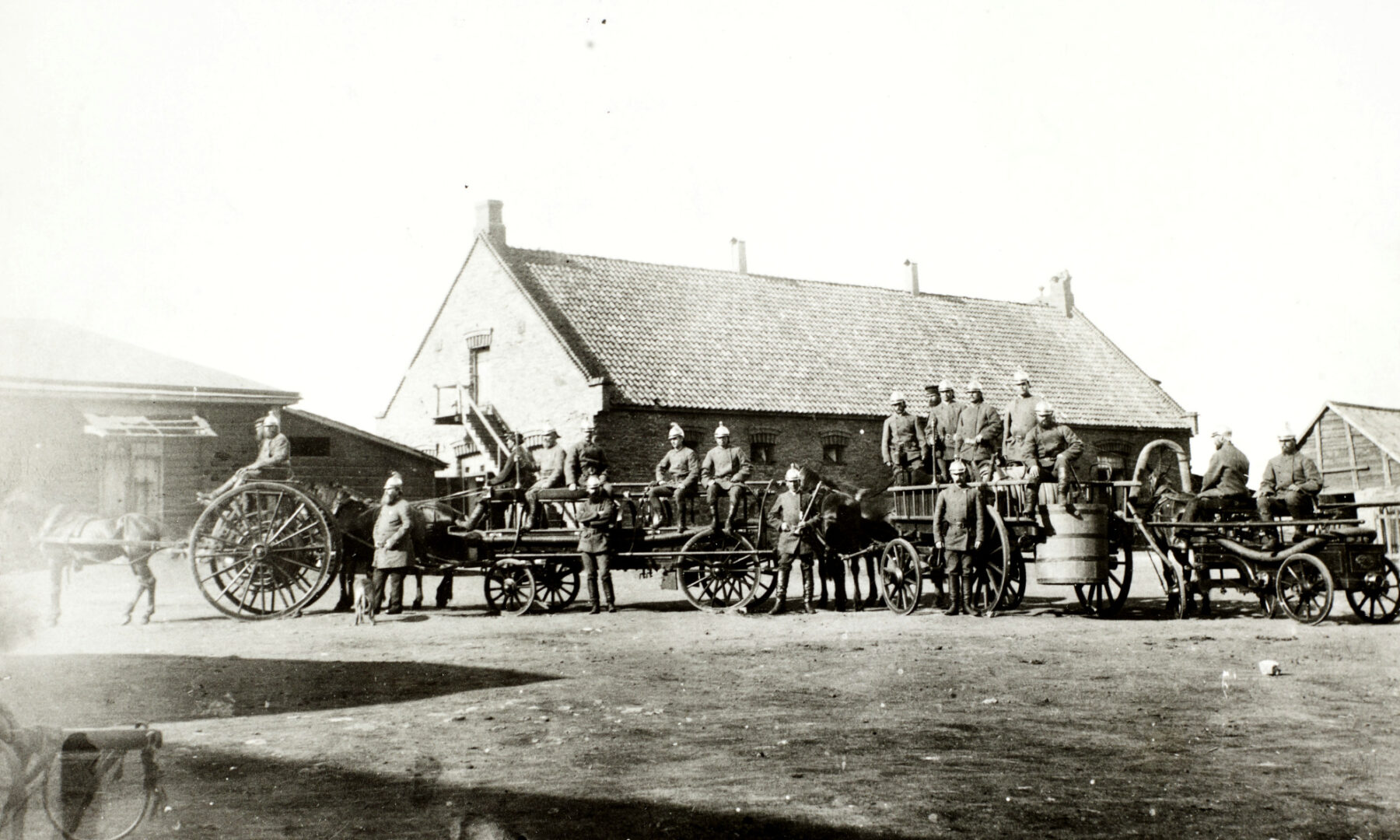
 DX587/65 - Photograph of fire brigade at Hughesovka
Services multiplied as the population grew. Hughes initially set up a small 12‑bed hospital with trained staff and qualified doctors. Epidemics of cholera and typhus forced regular expansions: by 1901 the hospital offered 120 beds with a staff of sixty‑one; by 1917 capacity reached 275 beds. Schools served British and local children separately. British classes were taught in English. The company also supported an Anglican church, dedicated to St David and St George, and contributed to the maintenance of the town’s Orthodox church alongside funds raised by the Orthodox workers themselves.
Policing, fire services and municipal structures developed too. The town’s economy diversified: factories for agricultural processing and the manufacture of clothing, shoes and accessories appeared, while everyday shopping was centred at the Sunday bazaar. Photographs show piles of bread, meats and produce and a dense crowd of buyers. By the 1897 census the town recorded four beer halls, one vodka outlet, five hotels and ten wine cellars; more than 300 shops and stalls operated, including three photo studios busy with portraits destined for families in Wales.
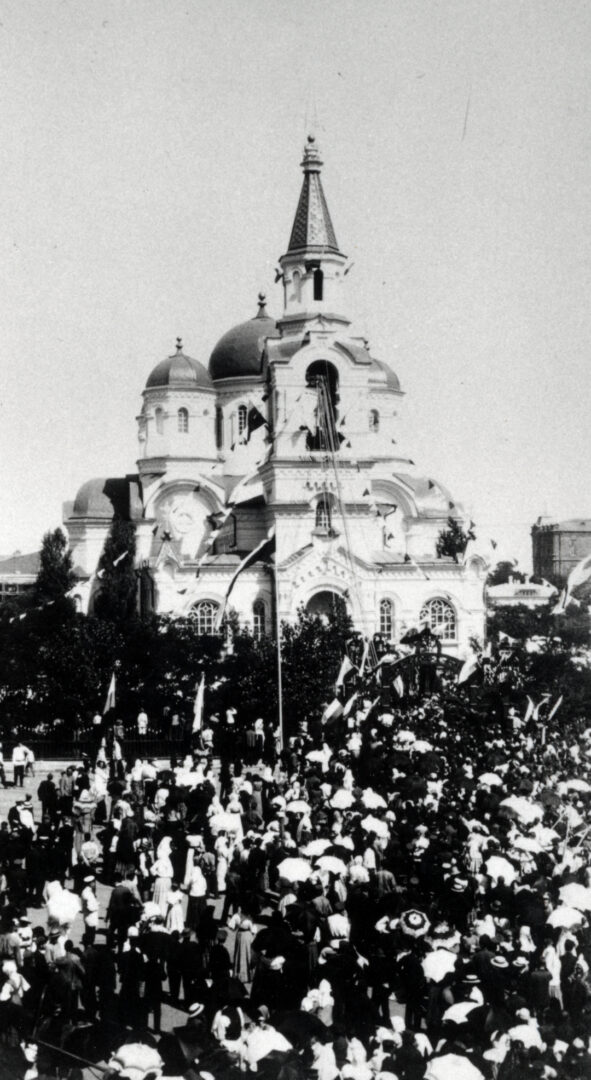 D381/4/79 - Cathedral of the Savior’s Transfiguration
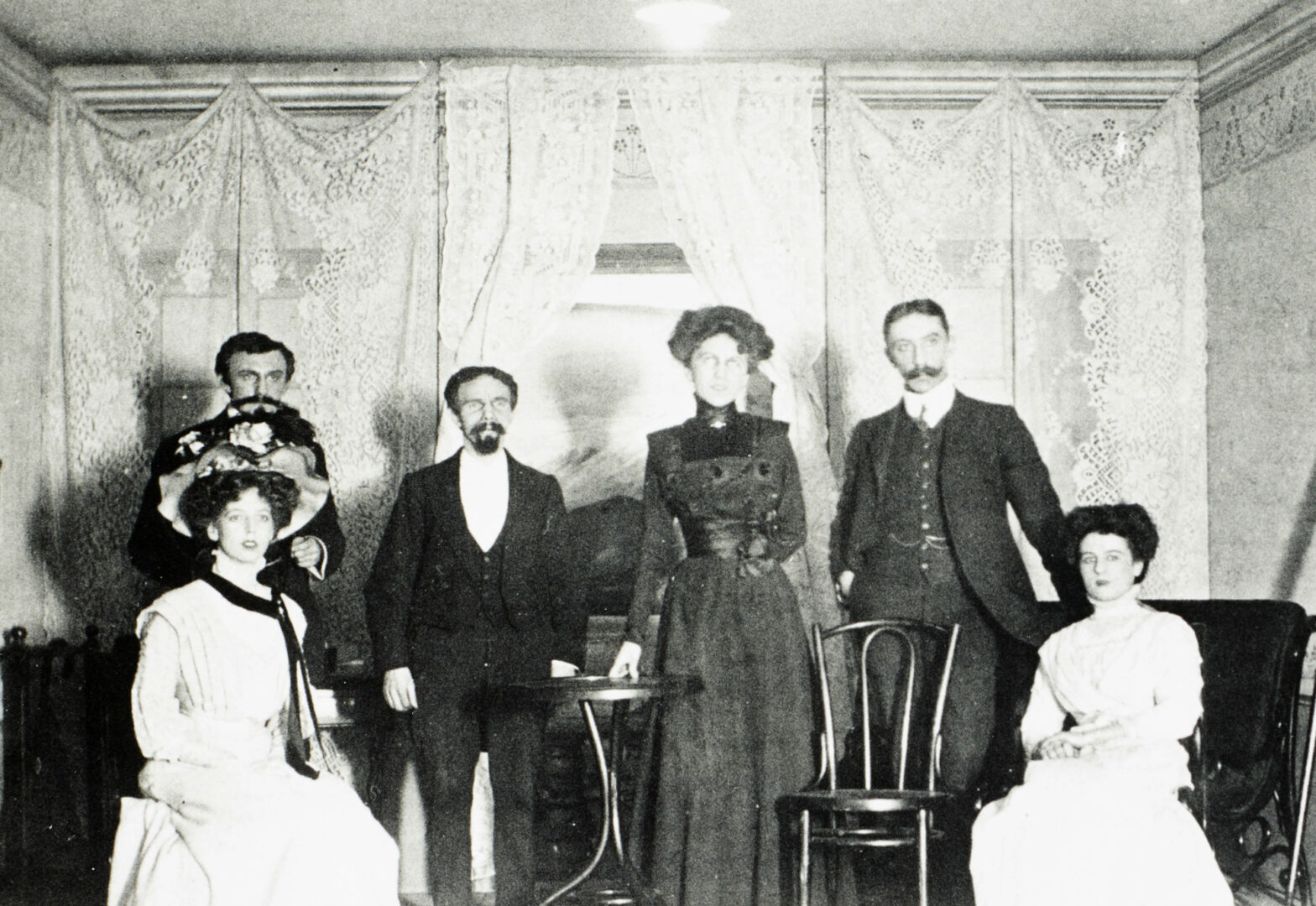 D381/4/20 - Leisure activities of the English community in Hughesovka
Leisure mixed the familiar and the new. Winters brought skating and sledging; summers meant swimming and boating on the works reservoir. Golf—probably popularised by Scottish engineers—sat beside tennis and cricket. The English Club staged monthly dances and theatrical productions, while families took beach trips to the Black Sea when time and transport allowed. The bazaar, beer halls and hotels provided meeting places where languages and accents blended in a frontier town finding its feet.
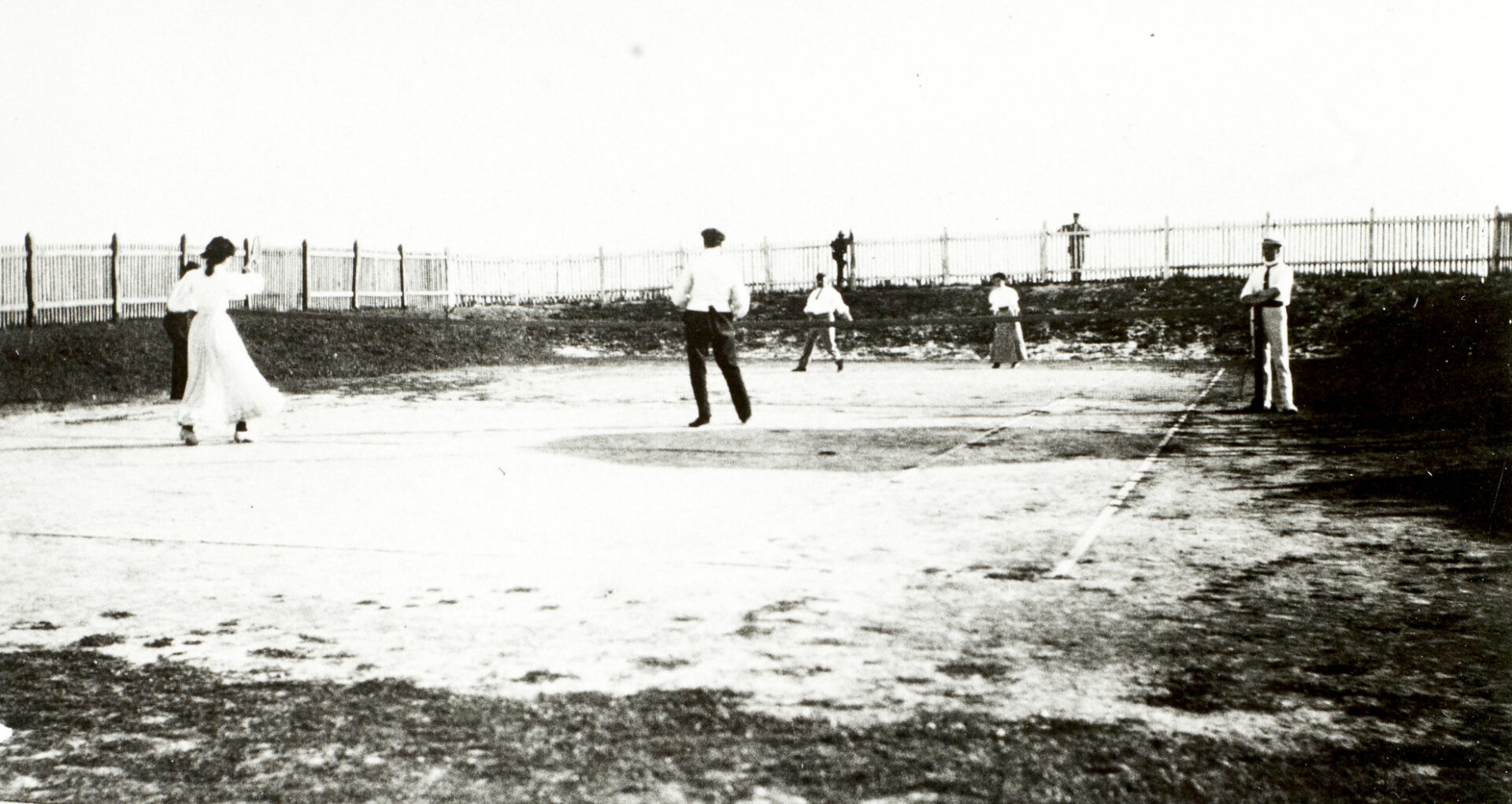 D381/4/22 - Leisure activities of the English community
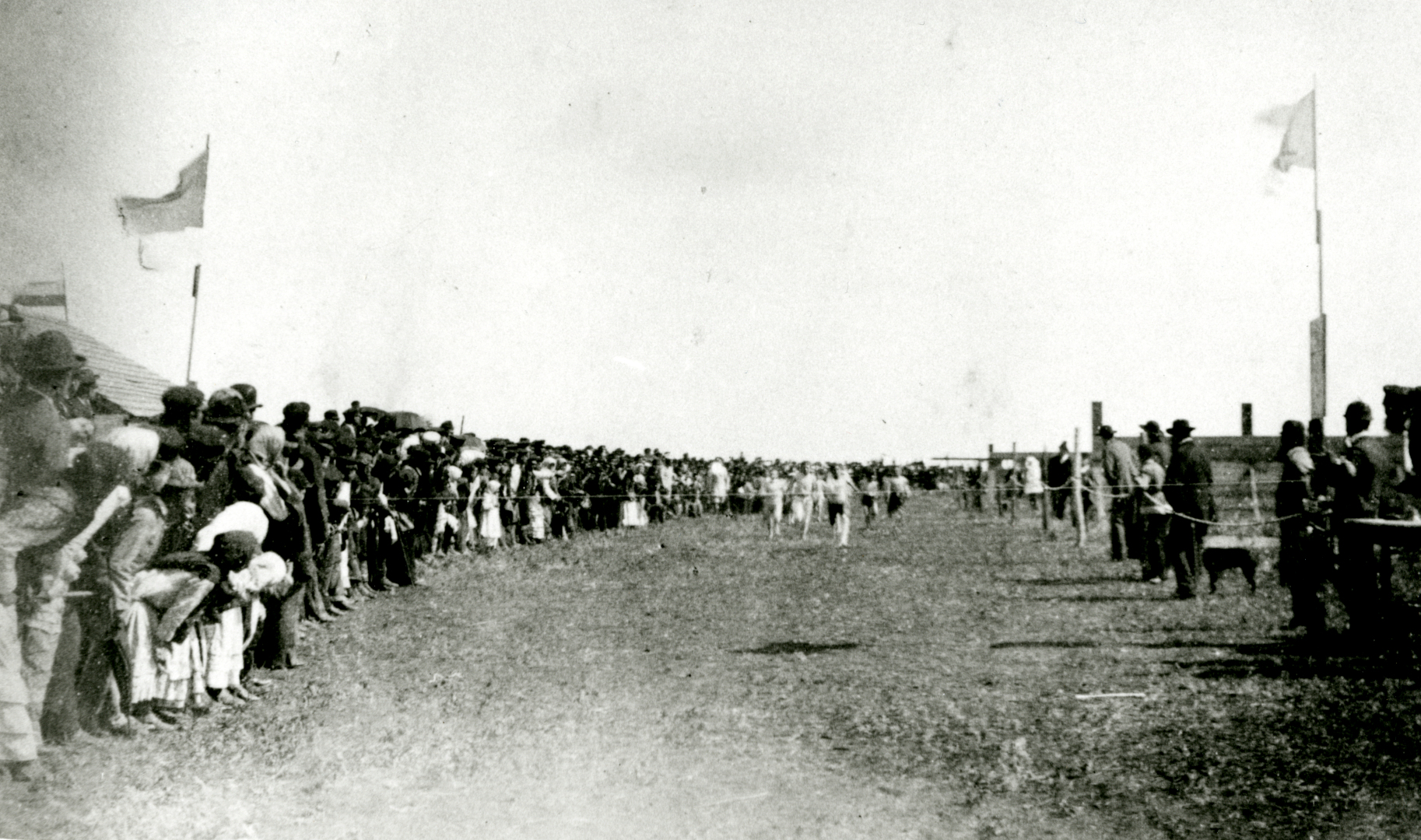 DNMW44/61 - Foot race, competitors approaching finish line