


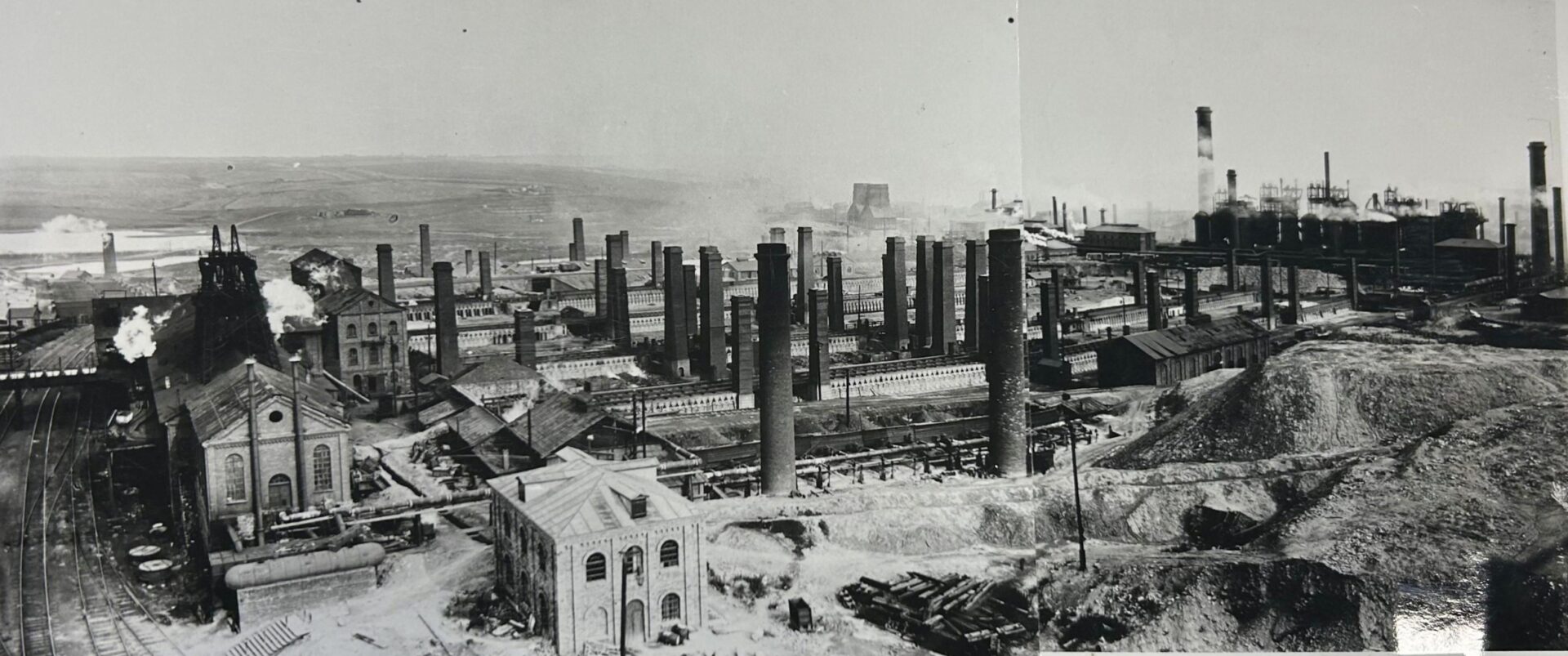
This exhibition traces the rise of Hughesovka—later Stalino and today Donetsk—from a windswept site on the Ukrainian steppe to a major industrial city with lasting Welsh fingerprints. In the 1860s, Imperial Russia wanted coal, iron and steel to accelerate railway building.
In Wales, John Hughes had the know‑how, capital, and confidence to deliver. Within a generation the works he founded grew into a company town and then a city supplying rails, steel and coal across the empire.
Our story follows a clear arc: Hughes’s Welsh beginnings; the agreement he struck with ministers in St Petersburg; the hazardous build and development of the New Russia Company Limited; the skilled workers who left South Wales to start again; the town that grew in the furnaces’ shadow; disease, accidents and unrest; vivid women’s accounts; and finally war, revolution and the dispersal of a community.
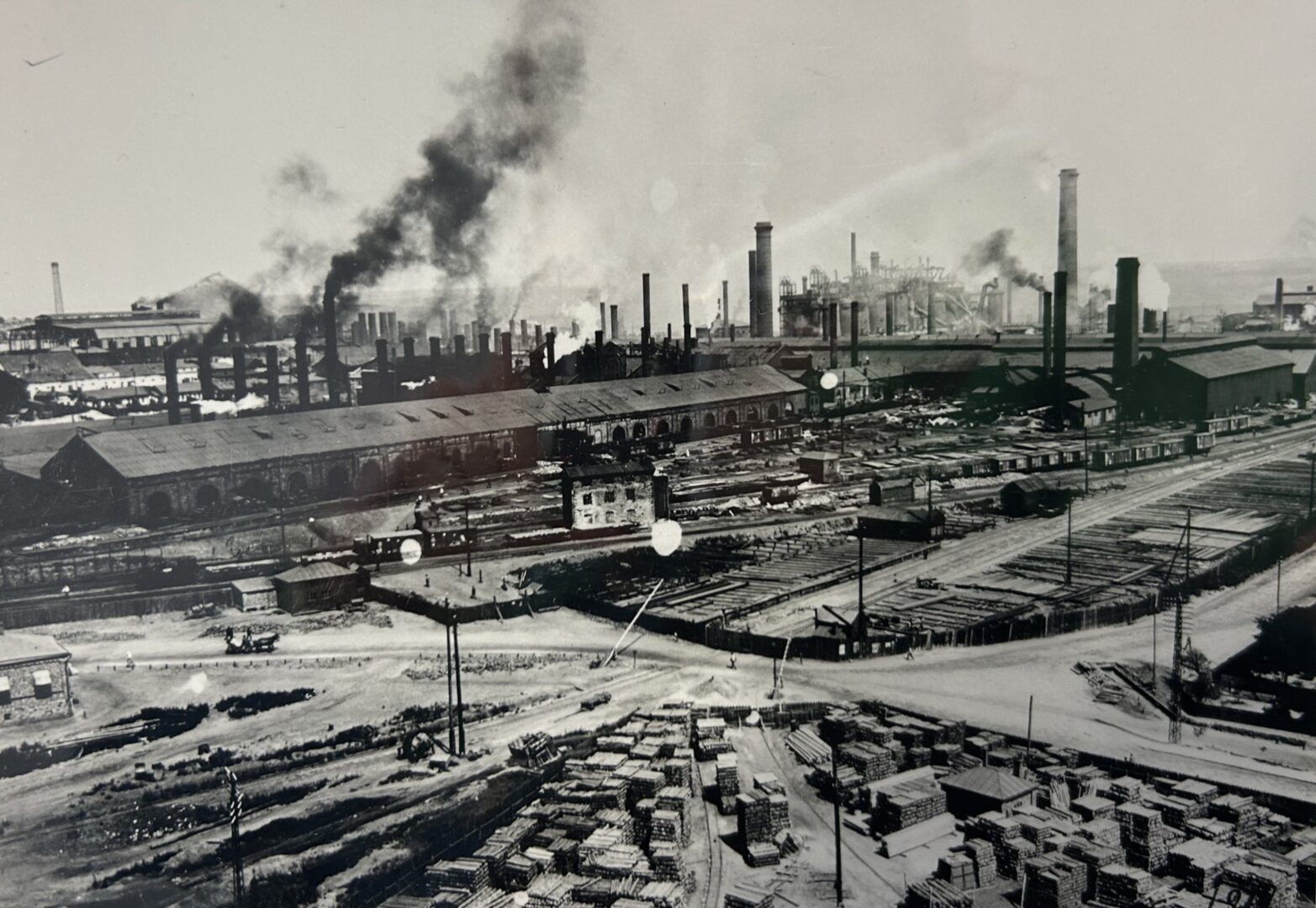 A view of the Hughesovka Steelworks