


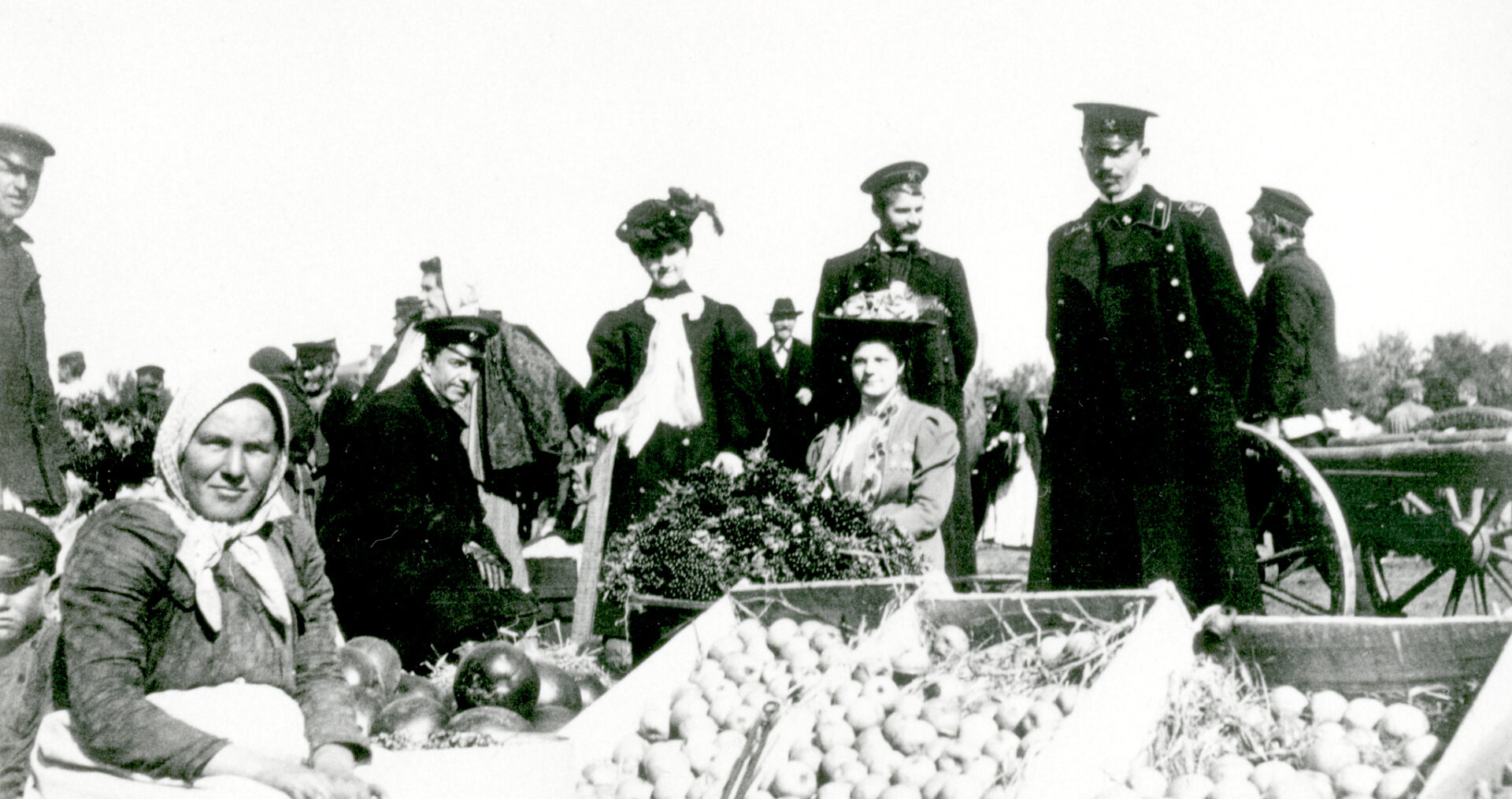
 D381/4/34 - British and Ukrainian people at a produce market
While back in Britain fashion was entirely controlled by the interests of the upper classes, in Hughesovka the residents were governed by a far more demanding power. The steppe’s extreme weather created an environment where, as described by Annie Gwen Jones, people “had not pretentions for fashion”.
For wealthy men and women fashion in the 19th century was dominated by a fitted silhouette. Women wore gowns with boned bodices and bustles and men prioritised suits that portrayed slim lines and slender frames. The overarching desire was to appear as elegant and svelte as possible.
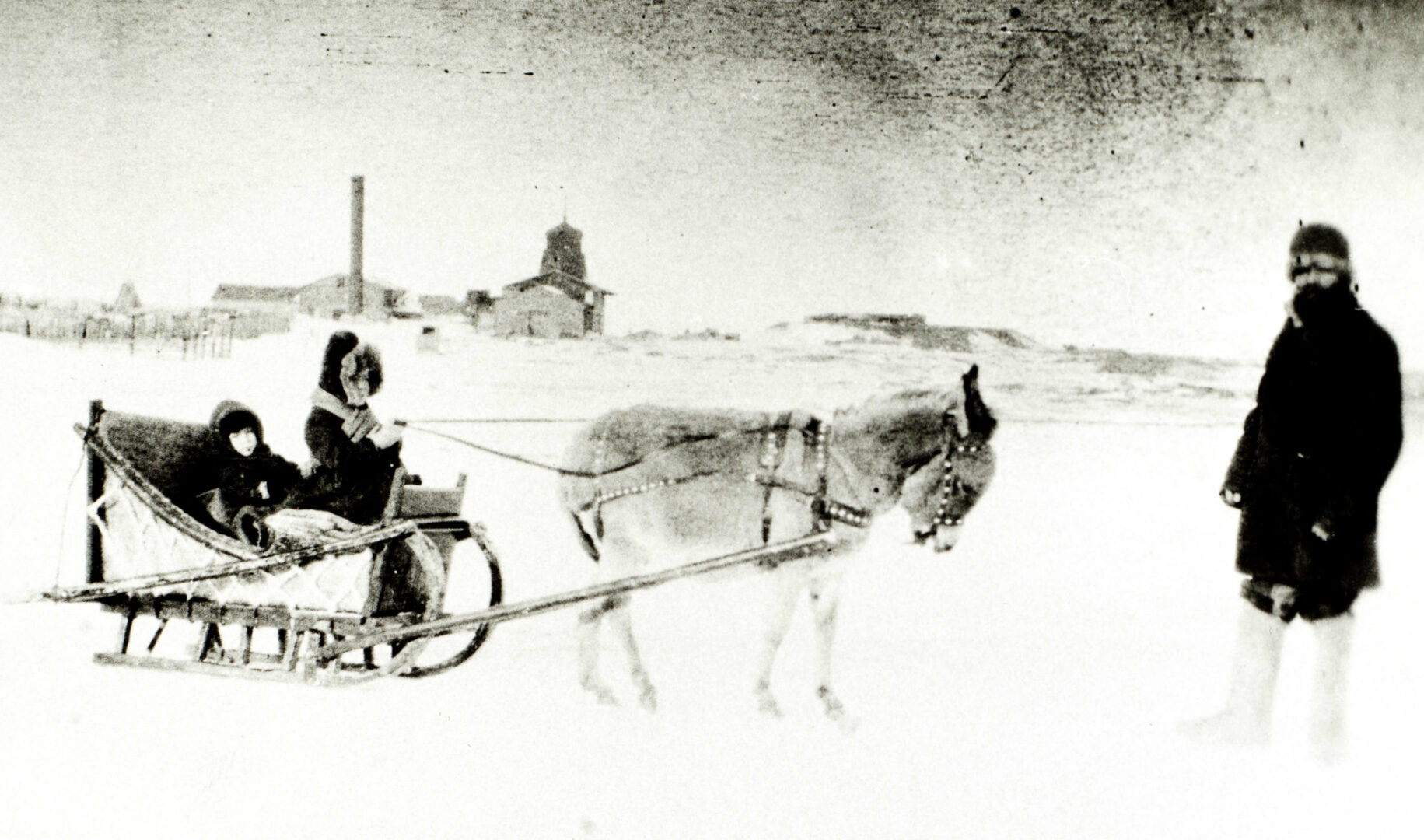 D381/4/67 - Photographs of the area surrounding Hughesovka
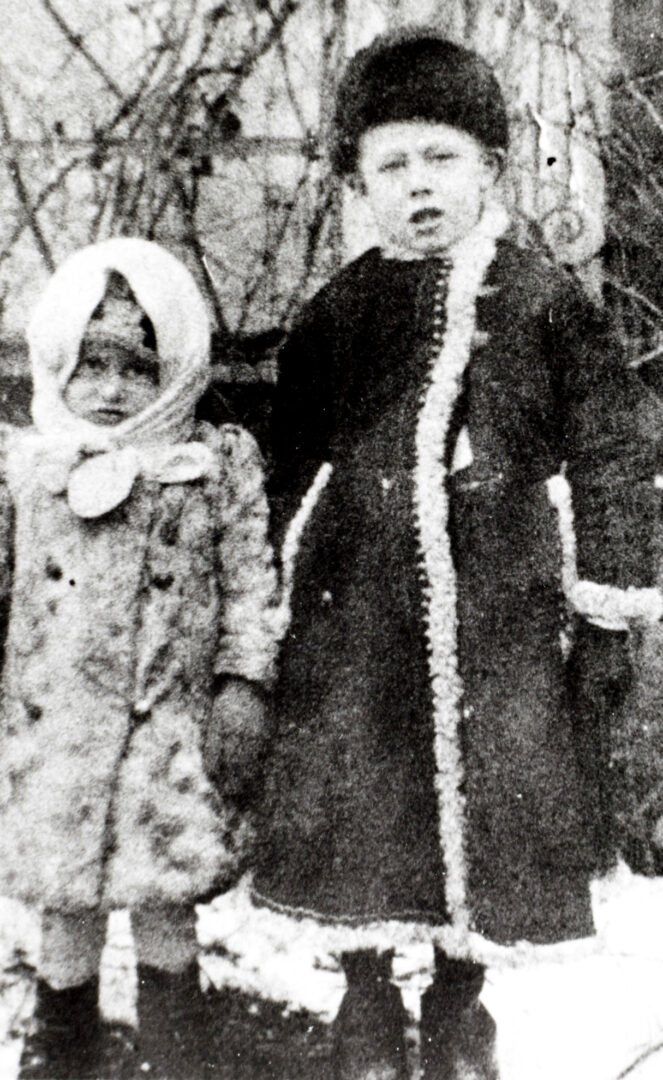 DX785/1/1-18 - Photographs of Calderwood family and friends in Hughesovka
However, this trend was entirely incompatible with Russia’s extreme climate. Winters required multiple thick heavy layers and summers ran so hot a tight boned corset could become a safety hazard. While residents attempted to keep up with the trends in the climate-controlled confines of their own homes, when one decided to venture outside it became a very different story.
The British community had dressmakers and tailors come and stay with them, paying for their clothes to be made with foreign fabrics and silks. The local community handmade their clothes, using flax fibres from flax plants woven together into a durable linen material which is the oldest form of fabric in human history! In the winter dublyonkas (thick furs and sheep skin coats), valenkis and Ushankas/papakhas/budenovkas were uniform for everyone. Annie Gwen Jones recalls how they used “a shawl of camels hair” to cover their faces and how furlined boots “over these furlined goloshes completed our costume”.
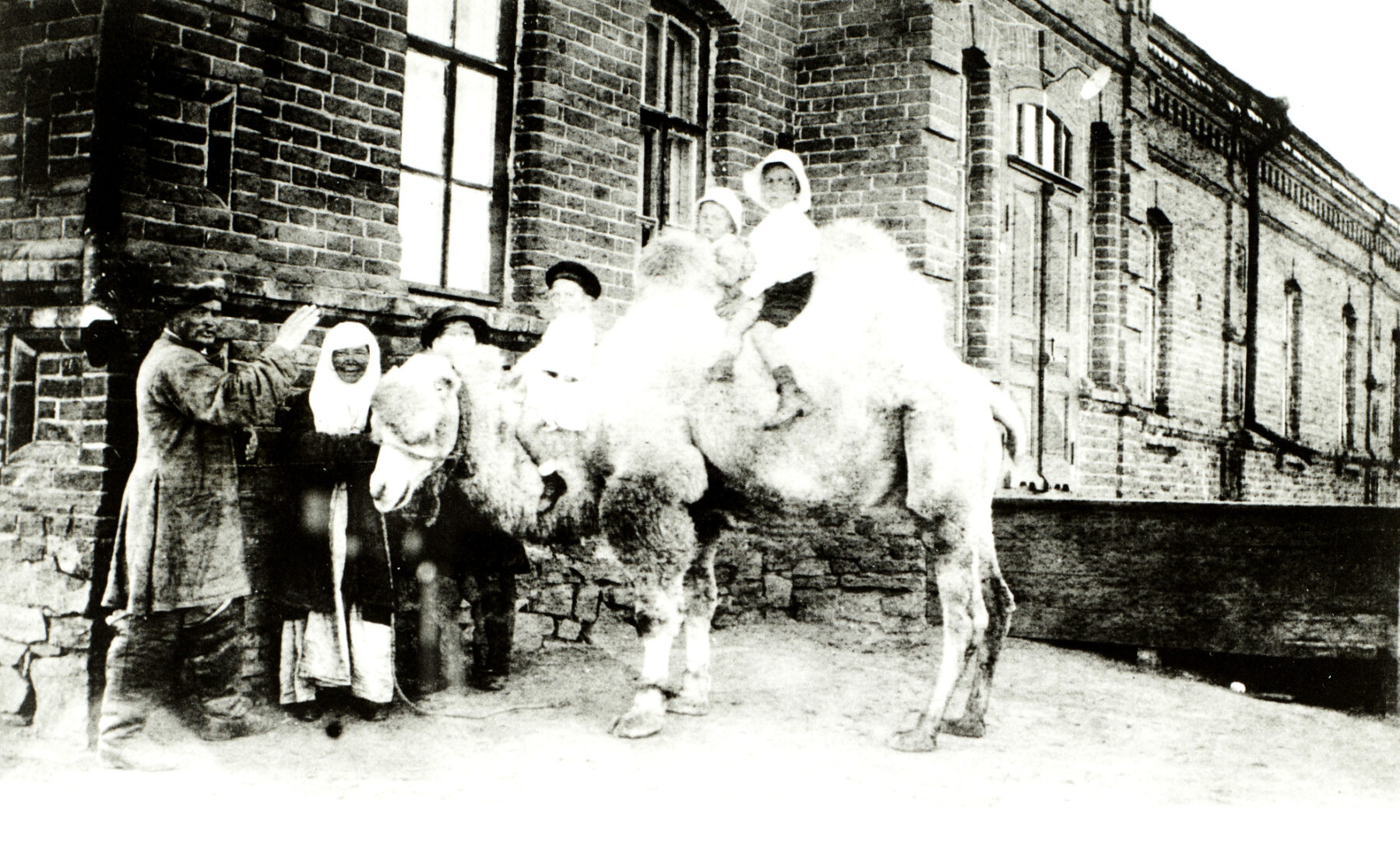 D381/4/95 - Riding a camel