


A Russian geological survey identified rich coal seams and workable ores in the Donbas region. The government wanted railways and the minister of the interior sought specialists. In London the ambassador, Baron Bruno, gathered recommendations and invited John Hughes to discuss a large metallurgical venture. Hughes accepted further talks in St Petersburg but insisted on seeing the ground before committing. His decision to survey the steppe himself was praised as “prudent and economical”.
He chose a site on the Kalmius River in the Bakhmut District of the Ekaterinoslav Province: coal was close, water plentiful, and if local iron ore proved unsuitable, higher‑grade material could be imported. In April 1868 a formal agreement was signed. The New Russia Company Limited was registered in London on July 3rd, 1869. The company’s mission included connecting the works to the Kharkov‑Azov Railway to move rails and steel around the country efficiently.
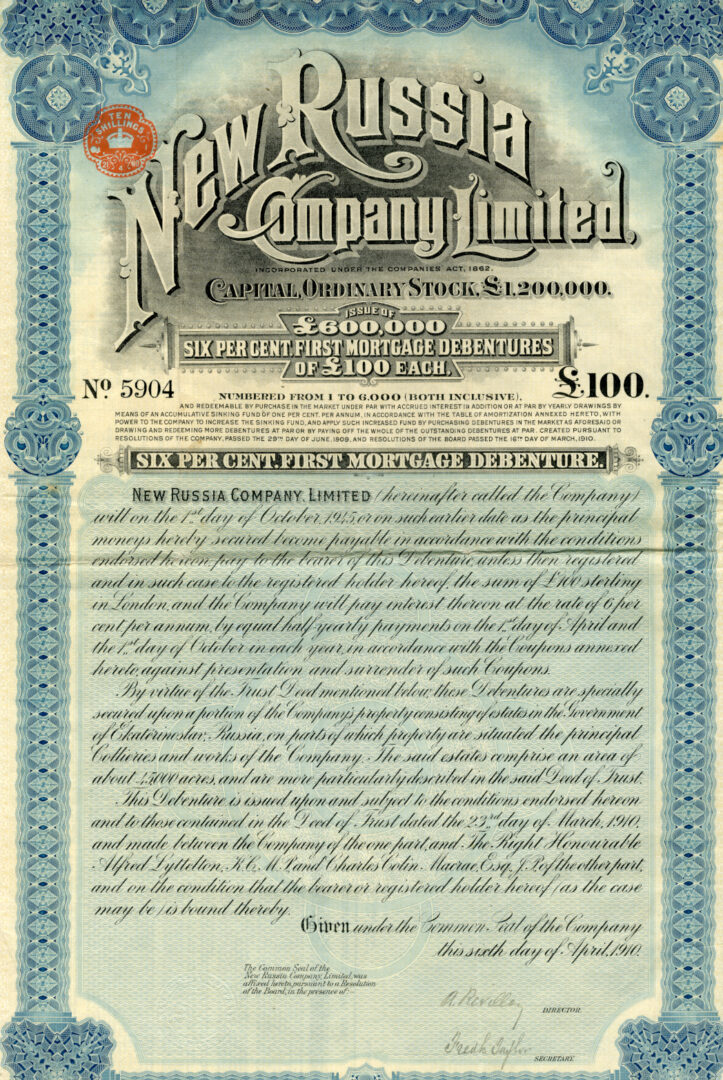
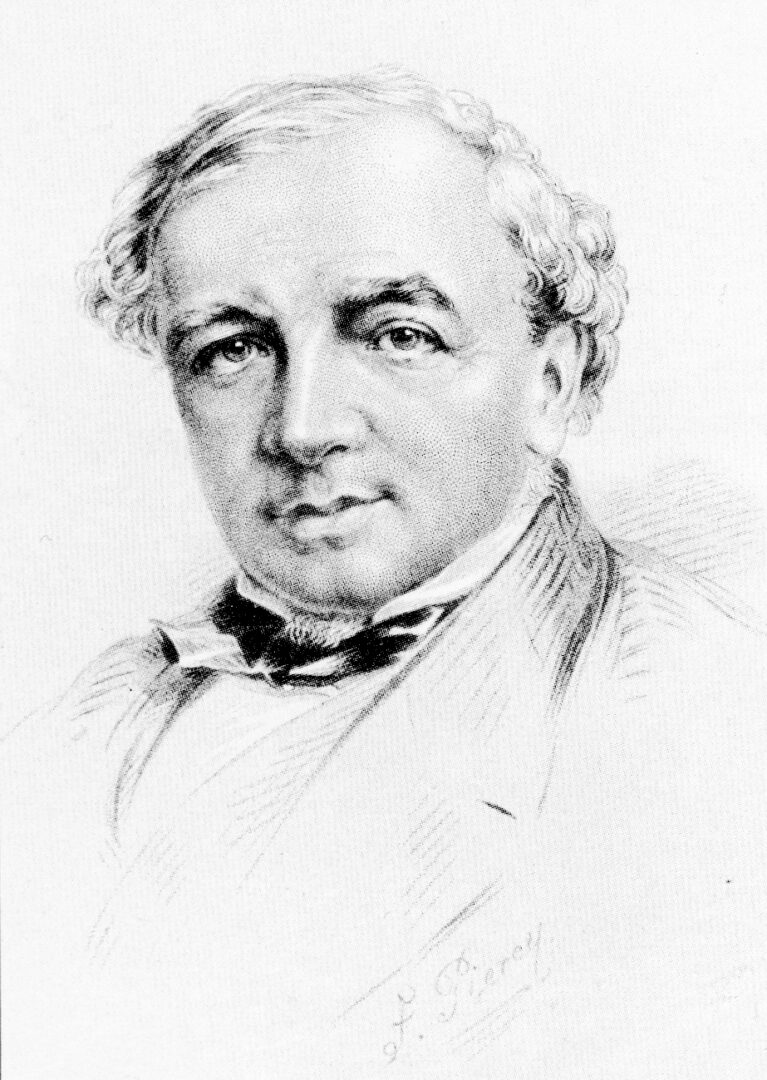 Thomas Brassey
Backers of weight came aboard. Sir Daniel Gooch, chairman of the Great Western Railway, and Thomas Brassey, the 19th century’s leading railway builder, invested and lent expertise. In the summer of 1870 Hughes sailed from Britain to Russia with a core team of men. “Eight shiploads of equipment, and about a hundred specialist ironworkers and miners, mostly from South Wales.” (Edwards, 1994, p.66). The last leg —from Taganrog on the Sea of Azov—ran by ox‑drawn wagon over open country.
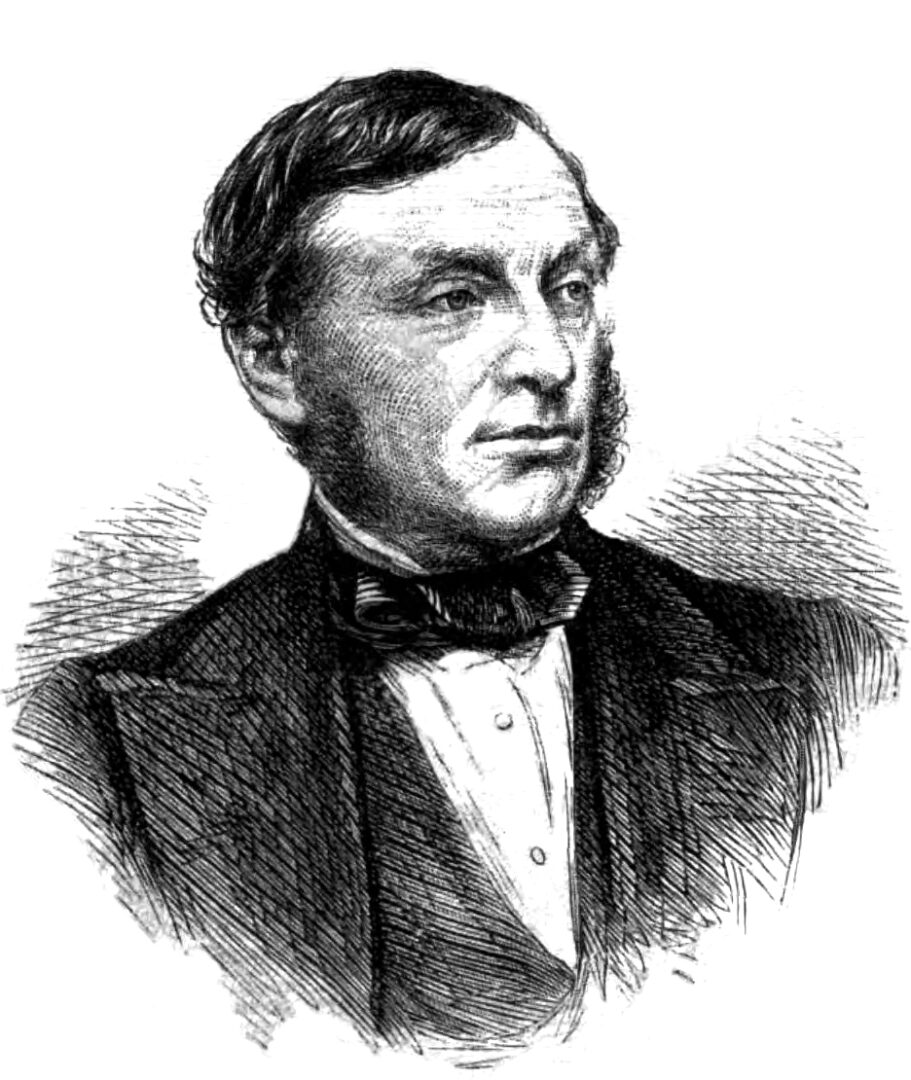 Sir Daniel Gooch
The first winter was brutal and an early cholera outbreak hit hard, but the works came together. On 24 April 1871 the first blast furnace was commissioned, reaching sustained output by January 1872.
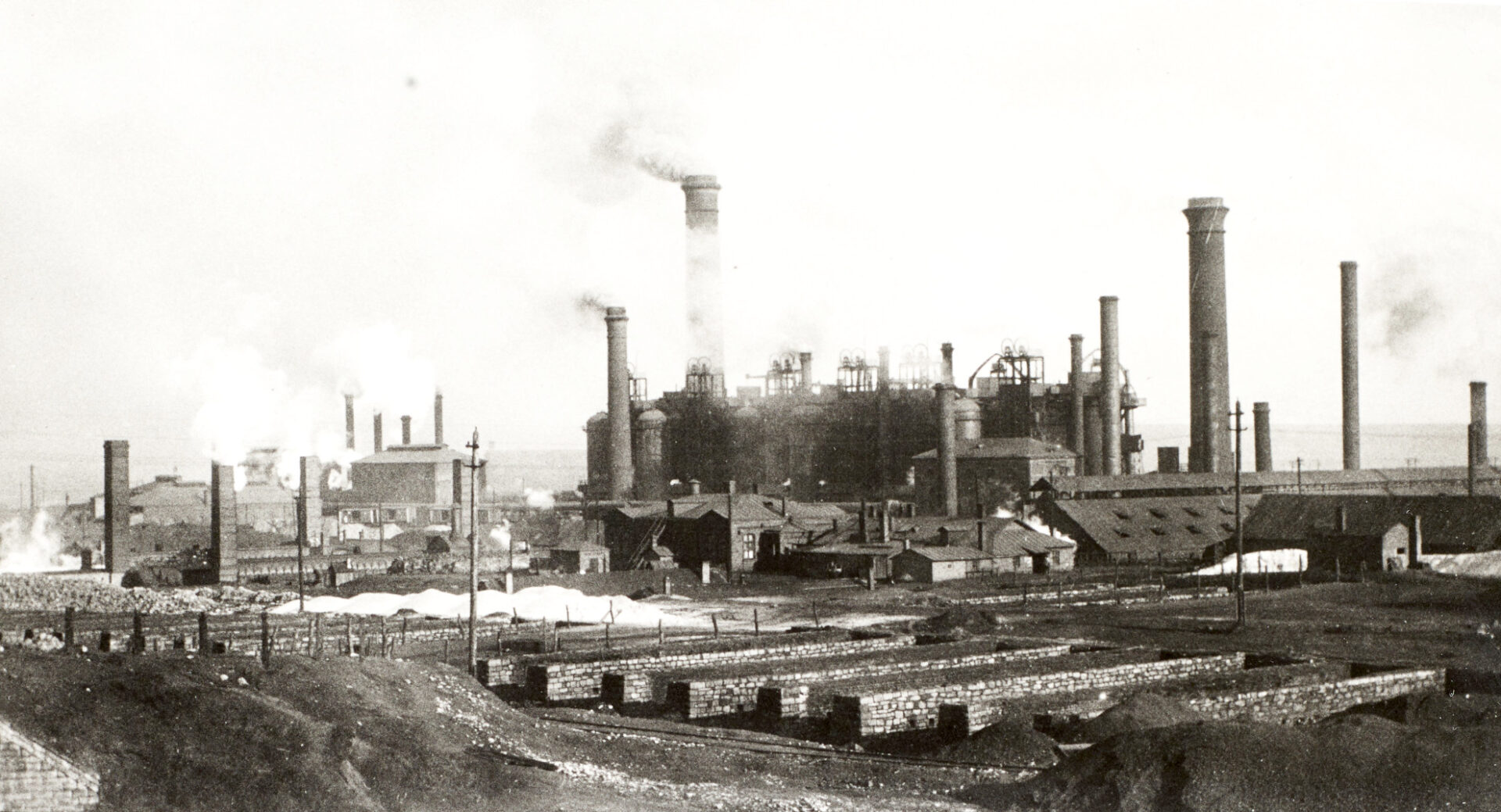 The works at Hughesovka c1906-1919
D381/4/11
The works at Hughesovka c1906-1919
D381/4/11